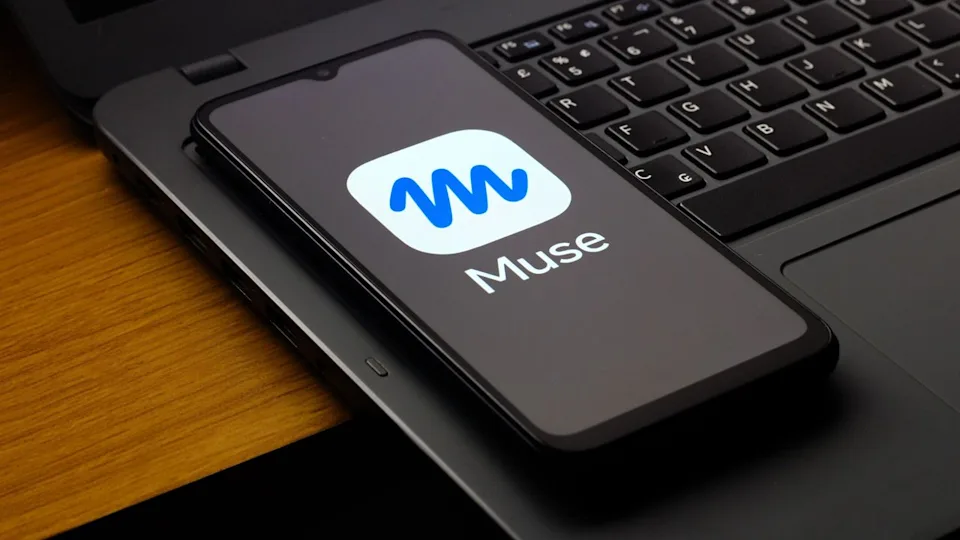
Meta Connect opens tonight with the rarest kind of setup for a market catalyst, one where the stock has already moved and the event that is supposed to explain the move has not happened yet. Meta (NASDAQ: META) shares have run about 13% over two sessions on the reception to Muse, its new consumer AI agent, and Mark Zuckerberg’s keynote lands at 4 p.m. Pacific, after the US market closes, per Meta’s own agenda. That means no one can trade the announcements until Thursday, so tonight is a clean test of whether the substance matches the price the market has already paid.
The stock closed the gap between hype and proof once this week already. META traded around $755 on Wednesday, up about 2.6% on the day and roughly 37% on the month, extending a run that began when Muse reached No. 1 among free apps on the US App Store with about 730,000 downloads in its first ten days. The app’s reception was strong enough to move other companies’ shares, driving the CPU rally that lifted Intel and its peers on the theory that agentic AI needs far more processing power. Tonight, Meta Connect has to show what comes after a No. 1 ranking.
Meta shares have run about 13% over two sessions into the Meta Connect keynote, trading near $755. Source: TradingView.What the Market Has Already Paid For Ahead of Meta Connect
The two-session move is the number the Meta Connect keynote has to earn. Muse is the consumer face of Meta Superintelligence Labs, the division Zuckerberg stood up this year to chase what he calls personal superintelligence, and its fast adoption is the first visible evidence that Meta’s enormous AI spending might reach users at scale. The stock has spent 2026 caught between two Metas: the advertising engine that funds everything, and the loss-making AI-and-hardware build that the market has treated as a cost until a return appears.
Meta guided 2026 capital spending to between $125 billion and $145 billion, and its Reality Labs division has lost billions a quarter while it builds toward glasses and AI hardware, the backdrop laid out in the $790 bull versus $430 bear case for the META stock. A hit consumer app is the kind of proof point the bull case needs, but a No. 1 ranking is not revenue, and the Meta Connect keynote has to start bridging that distance.
Investor Takeaway
The catalyst is priced before it lands, since the 13% run happened on Muse’s reception and Meta Connect comes after the close, so tonight tests whether the substance matches a move the market has already made.
What Is Actually on the Meta Connect Agenda Tonight
Meta’s published agenda is narrower than the speculation around it. The keynote runs tonight, September 23, at 4 p.m. Pacific, followed by a Developer State of the Union on September 24 at 10 a.m. Pacific, and Meta bills the two days as covering “AI technologies, AI glasses and VR,” from its Menlo Park campus. Among the confirmed developer sessions is one on building web apps for the Meta Ray-Ban Display, the $799 glasses with a color display that opened to developers earlier this year.
Beyond what Meta has confirmed, The Information reported that during the Meta Connect event, the company will unveil a camera-free pair of smart glasses, codenamed Luna, with six microphones and a dedicated Meta AI button, slated to ship this fall, as summarized by Engadget. A separate report points to a possible on-stage demo of a hologram-style call on a lightweight mixed-reality headset codenamed Project Phoenix, though that device is reported to be aimed at 2027. Meta has confirmed none of these product details.
Why the Camera-Free Glasses Answer a Privacy Problem
The camera-free design, if the reports hold, is a strategic answer rather than a downgrade. Meta’s smart glasses have drawn steady criticism over the prospect of being filmed in public without consent, and a pair that keeps the microphones and the AI button but drops the camera lets Meta push its wearables into more everyday settings while sidestepping the objection. It also sharpens the product’s purpose: the glasses become a way to talk to Meta AI and Muse rather than a way to record.
That matters for the same reason Muse matters. Zuckerberg has argued that people without AI glasses will eventually be at a disadvantage, and the wearables line is how Meta intends to put its AI in front of users all day. A camera-free entry point widens the top of that funnel, which is why the glasses are a core Meta Connect story rather than a side one.
Where Muse Goes From a No. 1 App to Revenue
This is the question the run is really about, and it is the same one every AI catalyst this season has faced. A hit demo lifts a stock the way Apple’s iPhone Duo and Tesla’s Roadster reveal have, but the market eventually asks how the excitement becomes cash flow. For Meta, the path runs through advertising and, potentially, through agentic commerce and developer tools built on Muse, but Meta has not separated AI revenue from advertising in its reporting, so investors are pricing potential rather than a disclosed line.
The Meta Connect keynote is the moment to start drawing that line. Concrete signals would be a Muse developer platform with a revenue model, usage or engagement figures that show retention rather than launch-week curiosity, and a glasses lineup with prices and ship dates rather than concepts. Any of those would give the two-session run something to stand on.
What Would Disappoint the Market After the Close
Because the reaction is delayed until Thursday, the failure modes are worth naming now. A keynote heavy on vision and light on shipping products, another deflection on when the AI spending pays off, or glasses shown as prototypes without prices would leave the run exposed, since the stock has already priced the optimism. A Phoenix headset teased for 2027 with no near-term product attached would read as more capex without a nearer return.
The bar is set by the price, not by the past. Meta has spent the year asking the market to fund an AI build on faith, and a strong Muse showing plus real, dated hardware would convert some of that faith into evidence. The market cannot vote until Thursday, which gives the Meta Connect keynote one job: give the run a reason to hold.
Investor Takeaway
Dated hardware is the tell, because prices and ship dates on the glasses would signal product, while a 2027 Phoenix tease would read as more capex without a nearer return.